
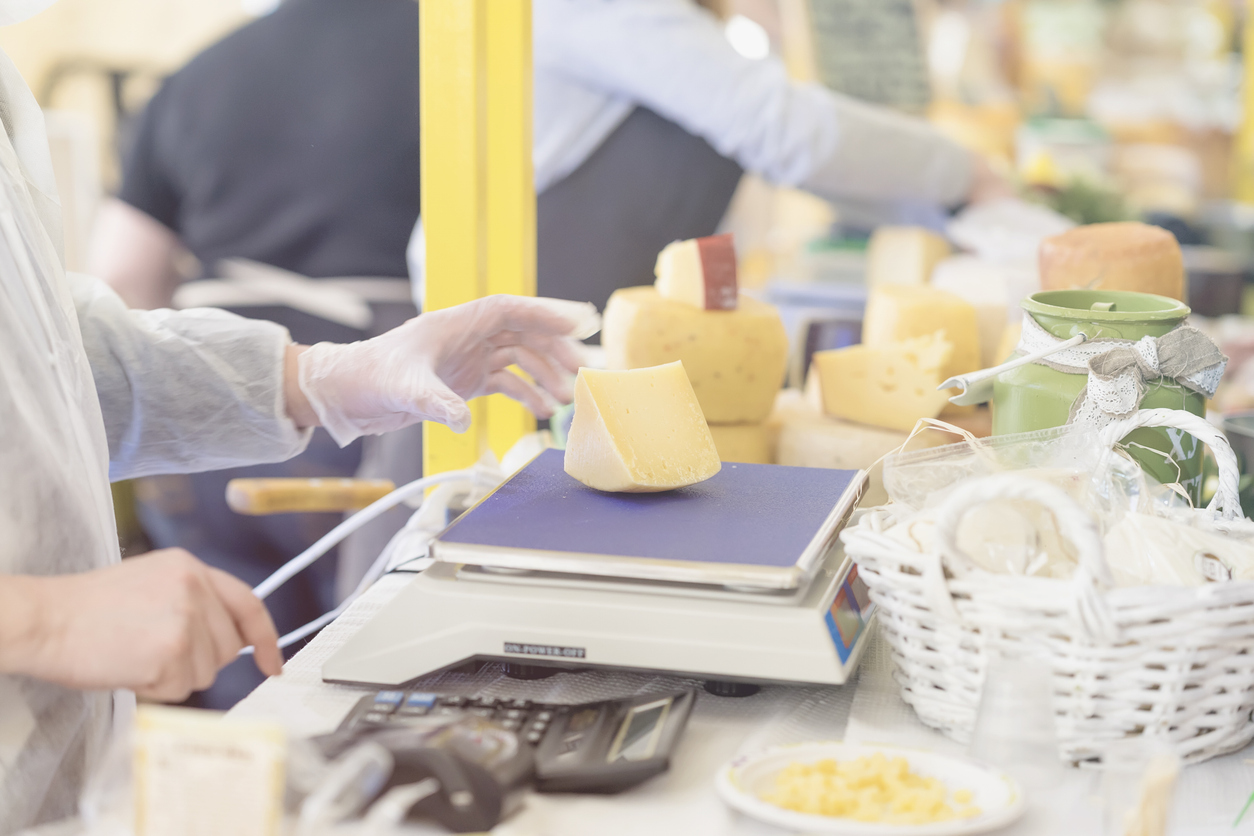
Whether you run a smaller operation selling at local farmers’ markets or you manage a large-scale cheese manufacturing process, you know it’s precision work. Incorrect ingredient amounts can mess up a batch, resulting in product waste. And a few ounces or even grams off per portion, multiplied across all your units, can lead to real yield loss.
Accurate weighing matters at every stage, from milk intake to retail-ready packaging. In this guide, we cover the critical role of cheese processing scales at each stage of manufacturing, and which scales might work best for your business.
Why Accurate Weighing Matters in Cheese Production
There are several reasons you need a reliable, quality scale when producing cheese, including:
- Product consistency: Batch-to-batch uniformity starts with precise measurement.
- Yield optimization: Overfill and giveaway can cost real money.
- Regulatory compliance: Legal-for-trade requirements, net weight labeling, and FDA/USDA traceability all require accurate weighing data.
- Profitability: The right weighing equipment can increase efficiency and reduce errors, helping support your bottom line.
Key Weighing Checkpoints in the Cheese Manufacturing Process
Scales play a crucial role at multiple points in the cheese manufacturing process, ensuring accuracy, consistency, and efficiency.
1. Milk Intake & Ingredient Batching
At the very start of production, scales are used to measure incoming milk by weight or volume, helping you maintain quality control while accurately tracking costs and supplier contributions. This step also includes batching key ingredients, such as cultures, enzymes, salt, and other additives.
Precise measurements ensure each batch meets your exact formulation standards. Even small errors at this stage can compound significantly, leading to inconsistencies in texture, flavor, and yield across production runs.
2. Curd Handling & Whey Separation
During curd formation and whey separation, weighing is essential for monitoring process efficiency and product quality. Manufacturers track curd yield relative to the original milk input to evaluate how effectively solids are captured. As curds are handled and pressed, scales help monitor moisture loss, which directly impacts the final texture and classification of the cheese.
Whether you’re producing cheese curds with high moisture content, soft cheese, or cream cheese, maintaining tight control over weight changes ensures the desired consistency and performance of your final product.
3. Block Forming & Aging
Once curds are formed into blocks or wheels, scales are used to weigh them both before and after pressing to track yield and standardize product sizes. During aging, ongoing weight monitoring helps you track moisture loss over time.
Moisture loss is an especially important factor for products like washed rind cheeses, soft-ripened cheeses, semi-hard cheeses, and cheddar cheese. These weight records also support compliance documentation, allowing manufacturers to maintain traceability and verify quality across aged product lots.
4. Cutting, Portioning & Slicing
As cheese moves into final processing, precise portioning is critical for retail and foodservice applications. Scales ensure each cut meets your target weights, minimizing variability and maintaining consistency across products. An industrial cheese slicer with an integrated scale can help you automate this process and improve throughput.
Accurate weighing at this stage also reduces product giveaway (particularly important for high-value cheeses) and ensures that all cheeses include consistent sizing for packaging and sale.
5. Packaging & Distribution
In the final stage, scales verify product weight before sealing to ensure accuracy and compliance with labeling requirements. You can incorporate checkweighing systems into your packaging line to automatically inspect each unit and reject those that fall outside acceptable tolerances.
Matching actual weights to labeled values is essential for traceability compliance and customer trust, while also supporting efficient logistics and distribution across the packaging line.
Types of Weighing Equipment Used in Cheese Facilities
Different scales serve different purposes in a cheese production environment, and selecting the right type depends on your process, throughput, and sanitation requirements. From small-batch prep to high-speed packaging, each cheese scale plays a specific role in maintaining accuracy and efficiency.
Bench Scales
Bench scales are commonly used for lab sampling, small-batch ingredient preparation, and precise portioning tasks. Their compact footprint makes them ideal for workstations with limited space. In dairy environments, you should position these scales so they’re protected from excess moisture while still easily accessible to operators.
Floor Scales / Platform Scales
For larger operations, floor and platform scales handle bulk weighing tasks such as ingredient batching, cheese block or wheel weighing, and, sometimes, milk intake measurement. These heavy-duty systems are built to accommodate higher capacities and can support hundreds to thousands of pounds. Their durability and size allow for efficient weighing of pallets, vats, and bulk product at various production stages.
Washdown Scales
Washdown scales are critical in cheese facilities due to strict sanitation requirements. Designed with stainless steel construction, sealed load cells, and high ingress protection ratings, these scales can withstand frequent cleaning, high-pressure washdowns, and exposure to moisture.
Checkweighers & High-Speed Integrated Systems
Checkweighers are essential for high-speed packaging lines, automatically verifying the weight of each product as it moves through production. These systems use reject mechanisms to remove underweight or overweight items so only compliant products continue down the packaging line.
Special Scale Considerations for Dairy Environments
Standard industrial scales fall short compared to food processing scales due to the industry’s strict sanitation and environmental demands. Dairy facilities require washdown-ready equipment with high IP ratings, sealed electronics, and non-porous surfaces to withstand frequent cleaning and prevent contamination.
Corrosion resistance is also critical, making food-grade stainless steel the preferred material in wet, high-salt environments. In addition, scales must meet legal-for-trade requirements when used for selling by weight, ensuring accuracy and compliance.
Finally, USDA and FDA regulations require hygienic design and traceability, making heavy-duty, compliant scales essential for safe and efficient cheese production.
Choosing the Right Scales for Your Cheese Operation
When selecting a scale, consider key factors such as throughput, product type, environment, and integration needs. These determine which equipment will perform best in your facility.
You also need to match scale types to each stage of production: bench scales for prep, floor scales for bulk, washdown scales for sanitary areas, and checkweighers for packaging.
Working with a specialist matters. Providers like UniFide CST understand food processing requirements and can recommend solutions tailored to dairy operations.
Find the Cheese Scale You Need with UniFide CST
Precision matters at every stage of cheese production — and the right weighing equipment makes all the difference. UniFide CST provides industrial-scale solutions designed for food processing environments, including washdown-ready systems and integrated weighing technology built for accuracy and durability. Contact our team to discuss your cheese processing operation and find a scale solution that supports consistent quality and compliance.