
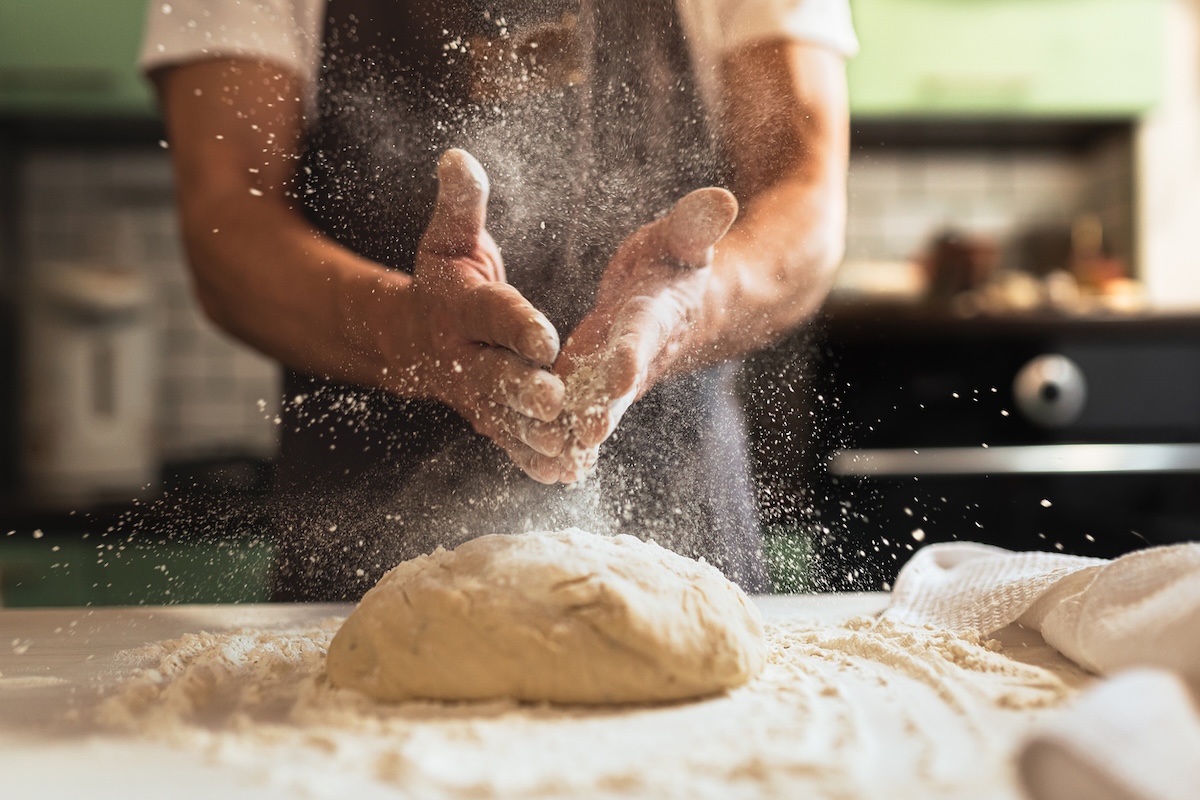
Every great loaf, cookie, or pastry starts with precise ingredient measurement. A quality scale is the tool that turns a recipe into a repeatable process, whether you’re batching flour at the receiving dock, portioning dough on the line, or verifying finished product weight before it ships.
The right bakery scales protect product consistency, control ingredient costs, and keep packaged goods compliant. Here’s what bakery owners and production managers should know about choosing scales built for the demands of daily production.
Why Accurate Bakery Weighing Scales Are Crucial
Even to more serious home bakers, it’s no secret that weighing your ingredients can make or break a baking recipe. But when you run a business, accurate weights impact more than just recipe results. Measuring ingredients by weight helps professional bakers:
- Maintain consistency: Every batch has the same flavor, texture, size, and appearance.
- Control portions: Dough, batter, fillings, and finished products can be divided evenly.
- Reduce waste: Accurate measurements prevent overuse of expensive ingredients and minimize failed batches.
- Calculate costs: Knowing the exact weight of ingredients and portions makes food-cost and pricing calculations easier.
- Scale recipes efficiently: Recipes can be increased or reduced without disrupting ingredient ratios.
- Support quality control: Scales help staff follow standardized recipes, even across different shifts or locations.
- Meet labeling requirements: Accurate product weights are essential when baked goods are packaged and sold by weight.
In a high-volume bakery, even a small measuring error can become a costly problem when repeated across dozens or hundreds of batches.
Types of Bakery Scales and Where They Fit in the Process
Different scale types are useful for different stages of your bakery’s workflow. Here are some common scales to consider depending on what you bake and the size of your operation.
Bench Scales
If you’re looking for bakery dough scales, a bench scale is likely your best bet. Bench scales are compact scales you place on counters, tables, or workbenches to weigh ingredients, dough, and finished products during production.
Floor Scales
If you need to weigh bulk ingredient bags, large containers, pallets, or other heavy loads, consider floor scales. These heavy-duty scales are installed at floor level and designed to handle the toughest weighing tasks.
Hopper Scales
If you run a larger operation, hopper scales can be invaluable for ingredient weighing and mixing. These scales are built into or attached to a hopper and weigh bulk ingredients as they’re stored, dispensed, or added to a production process.
Checkweighers
For large-scale bakeries packing and shipping out products, checkweighers are a huge efficiency improver. These automatic weighing systems verify that a product falls within a set weight range as it moves through a packaging or production line. You don’t have to individually weigh each package yourself, and products that don’t fall within the weight range are automatically rejected.
Special Considerations When Choosing a Bakery Scale
Some scales are better suited to specific industries than others, and this is especially true for food processing.
Accuracy and Readability
With baking, small ingredients like yeast, salt, and leavening agents require finer measurements than bulk flour or dough. You need scales that are up to the task, whether you’re working with pounds of dough or grams of salt.
Durability
Your bakery needs scales that can withstand flour dust, oils, sticky dough, heavy containers, and constant daily use. Look for scales with stainless steel construction, sealed controls, and corrosion-resistant components to help protect their performance and extend their life.
Ease of Cleaning
Baking gets messy, especially when you’re producing hundreds or thousands of products a day. Choose scales with smooth, food-safe surfaces that won’t trap flour, crumbs, sugar, oil, or other residues. Scales with removable platforms can also make routine cleaning easier.
Washdown Protection
Scales used in high-moisture areas or strict sanitation environments, like bakeries, may need a washdown-rated design. Washdown scales are built to withstand regular rinsing and cleaning without allowing water to damage internal electronics.
Benefits of Accurate Weighing for Bakeries
Beyond product quality, the right bakery scales have a direct line to your bottom line. A few extra grams of an expensive ingredient given away on every batch adds up fast, and underweight packages can create regulatory risk.
Reduced Waste and Over-Portioning
Eyeballing measurements or relying on worn-out mechanical scales tends to bias toward over-portioning. A calibrated bakery scale keeps every batch and finished portion right at the target weight, so you don’t give away butter, nuts, chocolate, and other costly ingredients batch after batch.
Labeling and Net-Weight Compliance
Packaged baked goods sold by weight are subject to net-weight labeling regulations. Consistently underweight packages can result in fines, retailer chargebacks, or lost customer trust. Reliable scales at the packaging stage provide the documentation and consistency you need to stay compliant.
Scaled Throughput With Automated Weighing Systems
For larger productions, integrated weighing systems that connect hopper scales, batching controls, and checkweighers can dramatically improve throughput without sacrificing accuracy. The result is a production line that runs faster and generates fewer errors than one relying on manual weighing checks alone.
Find the Best Bakery Scales With UniFide CST
From the first scoop of flour to the final packaged loaf, accurate weighing is the foundation of every great bakery. UniFide CST provides bakery-ready weighing equipment built for accuracy, durability, and the sanitation demands of food production environments. Contact our team to find the right scales for your bakery operation.